

What soil pH means
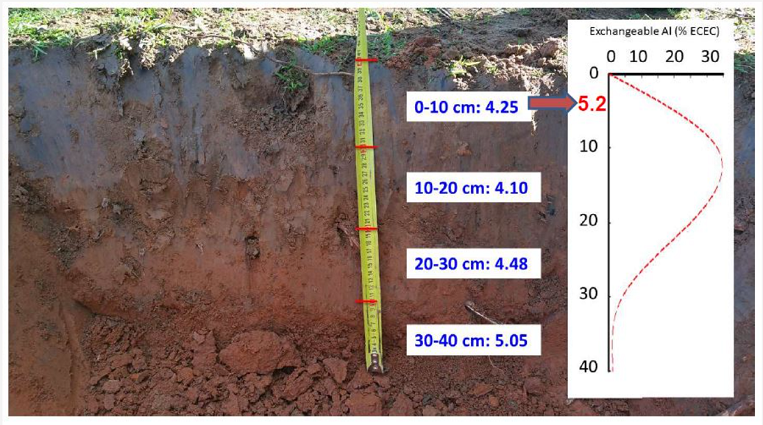
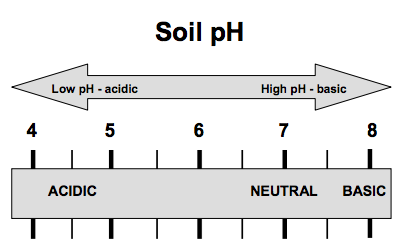
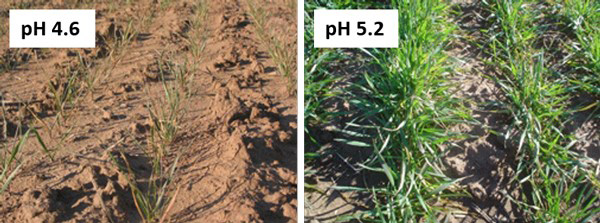
Soil pH, or soil reaction, is an indicator of the acidity or alkalinity of soil and is measured in pH units. The pH scale goes from 0 to 14 with pH 7 as the neutral point. Soil pH affects the solubility of minerals or nutrients essential for plant growth. Extremely and strongly acid soils (pH 4.0-5.0) can have high concentrations of soluble aluminium, iron and manganese, which may be toxic to the growth of some plants.
Measuring soil pH
Soil pH provides various clues about soil properties and is easily determined. There may be considerable variation in the soil pH from one spot to another. Your result is only as good as your sample. To determine the average soil pH, it is necessary to collect soil from several locations, combine and thoroughly mix these before taking a subsample for testing.
Desirable soil pH & Liming
While many plants can tolerate pH (in water) ranges between 5.2 and 7.8, most plants grow best in mineral soils when soil pH is between 6.0 and 7.0 (slightly acid to neutral). This general rule applies to most of the commonly grown fruits, vegetables, flowers, trees, and shrubs. Acidic soil pH can be corrected by applying lime.
Types of liming materials
Agricultural lime (calcium carbonate)
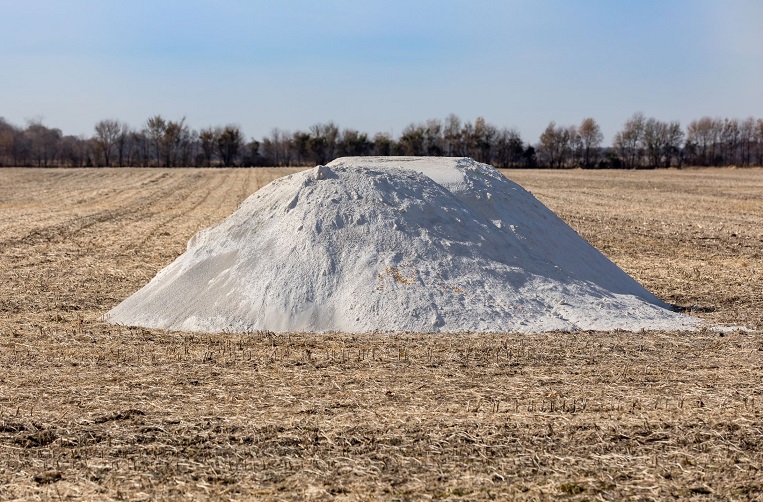
This is the most commonly used liming material. It consists of limestone crushed to a fine powder and is usually the cheapest material for correcting soil acidity. Good quality lime has 37 – 40% calcium.
Burnt lime (calcium oxide)
Also known as quicklime, burnt lime is derived by heating limestone to drive off carbon dioxide. It is more concentrated and caustic than agricultural lime and unpleasant to handle, so is rarely used in agriculture.
Hydrated lime (calcium hydroxide)
This is made by treating burnt lime with water, and is used mainly in mortar and concrete. It is more expensive than agricultural lime.
Dolomite
Dolomite is a naturally occurring rock containing calcium carbonate and magnesium carbonate. Good quality dolomite has a NV of 95-98, and contains 22% calcium and 12% magnesium. It is good for acid soils where supplies of calcium and magnesium are low, but if used constantly may cause a nutrient imbalance, because the mix is two parts calcium to one part magnesium (2:1), whereas the soil ratio should be around 5:1.
Gypsum (calcium sulfate)
Gypsum is not considered as a liming material, as it does not reduce soil acidity. It is used mainly to improve the structure of sodic clay soils, and these are not common in many areas.
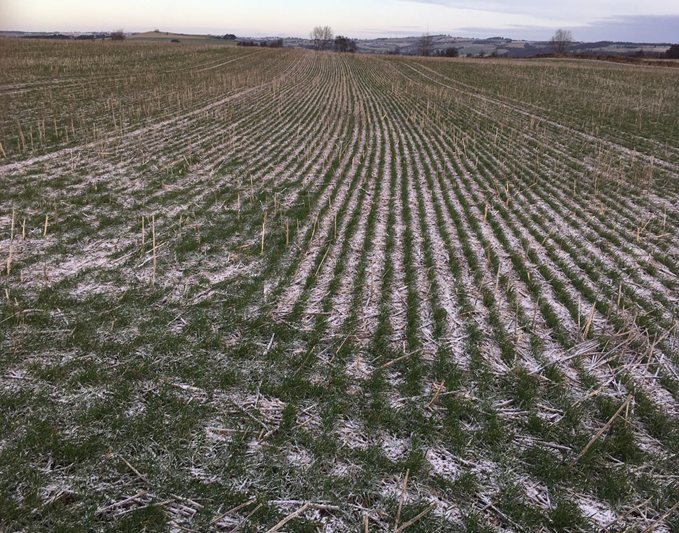
Rates of lime to apply
As soil acidity increases (the lower the pH), more lime is needed to ameliorate acidity. You will have to add more lime to clay soils and peaty soils than you will to sandy soils to achieve the same result because different soil types react in different ways to the application of lime. The amount of lime to apply depends on three main factors; neutralising value, fineness of the lime and soil texture.
Neutralising value (NV): NV tells you the lime’s capacity to neutralise soil acidity. Pure calcium carbonate has NV of 100, which is the standard. Ideally, NV should be over 95.
Fineness: The finer the particles of lime, the faster they react with soil. Lime manufacturers have to specify the percentages of different-sized particles in their product.
Soil texture (amount of sand, silt and clay)
It is easier to change pH on a sandy soil than on a clay soil. The estimated pH increases over the upper 10 cm of soil due to the addition of 1t/ha (1 kg/10 sq metres) of 100%NV product to different soil types are:
Sand 0.5 – 0.7
Loam 0.3 – 0.5
Clay 0.2 – 0.3
Red clay loam (basalt) 0.04 – 0.1
It is best to apply at least 2.5 t/ha to get a good response. The upper limit for one application is 7.5 t/ha.
Lime has to be physically in contact with moist acid soil in order to neutralise acidity. Lime dissolves slowly in the soil, therefore, incorporation in the top 10cm of soil (or deeper if possible) is best to increase the rate of reaction and leaching of lime to a greater depth. Incorporating lime will increase soil pH in the 0-10cm soil depth within 1-3 years.