


Plants need nutrients to grow which they absorb from the soil via the plant’s root system. Fertilizers provide the major nutrients (nitrogen, phosphorus and potassium and important secondary elements) that plants need. Unless the nutrients are replenished, the soil’s productive capacity declines with every harvest.
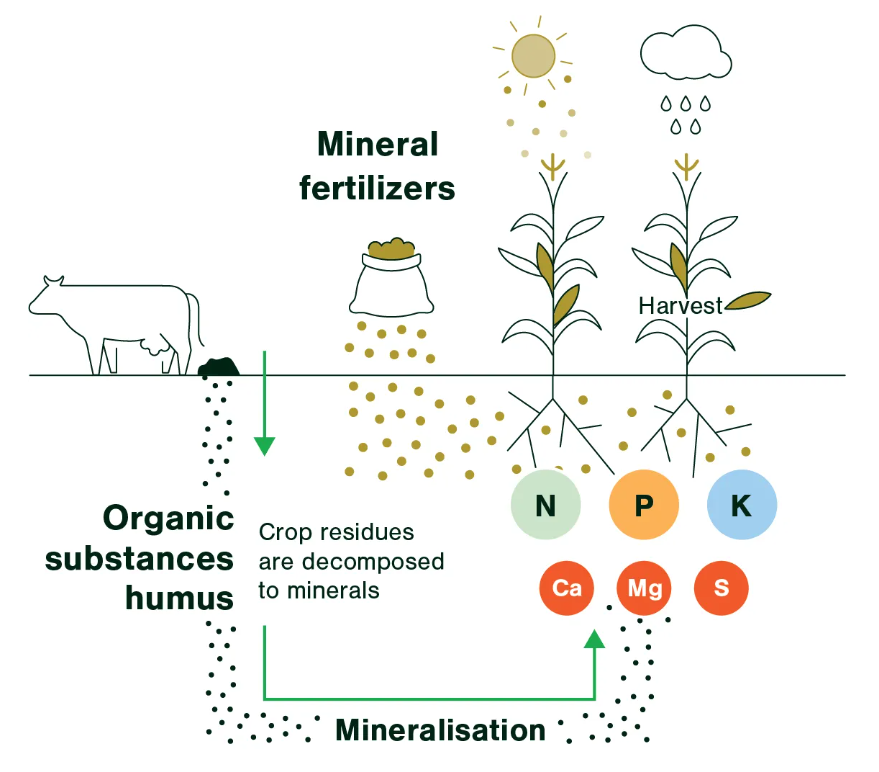
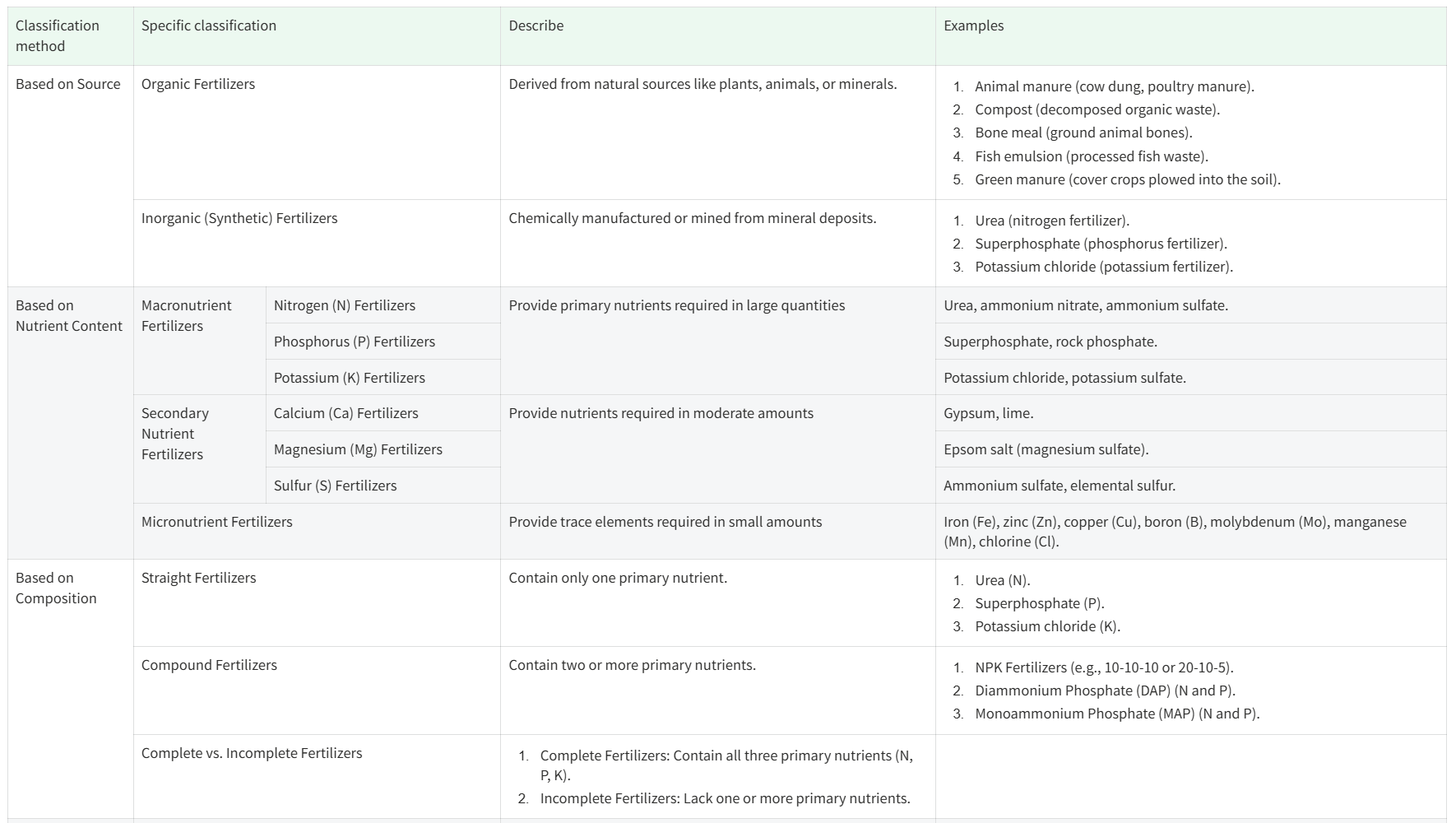
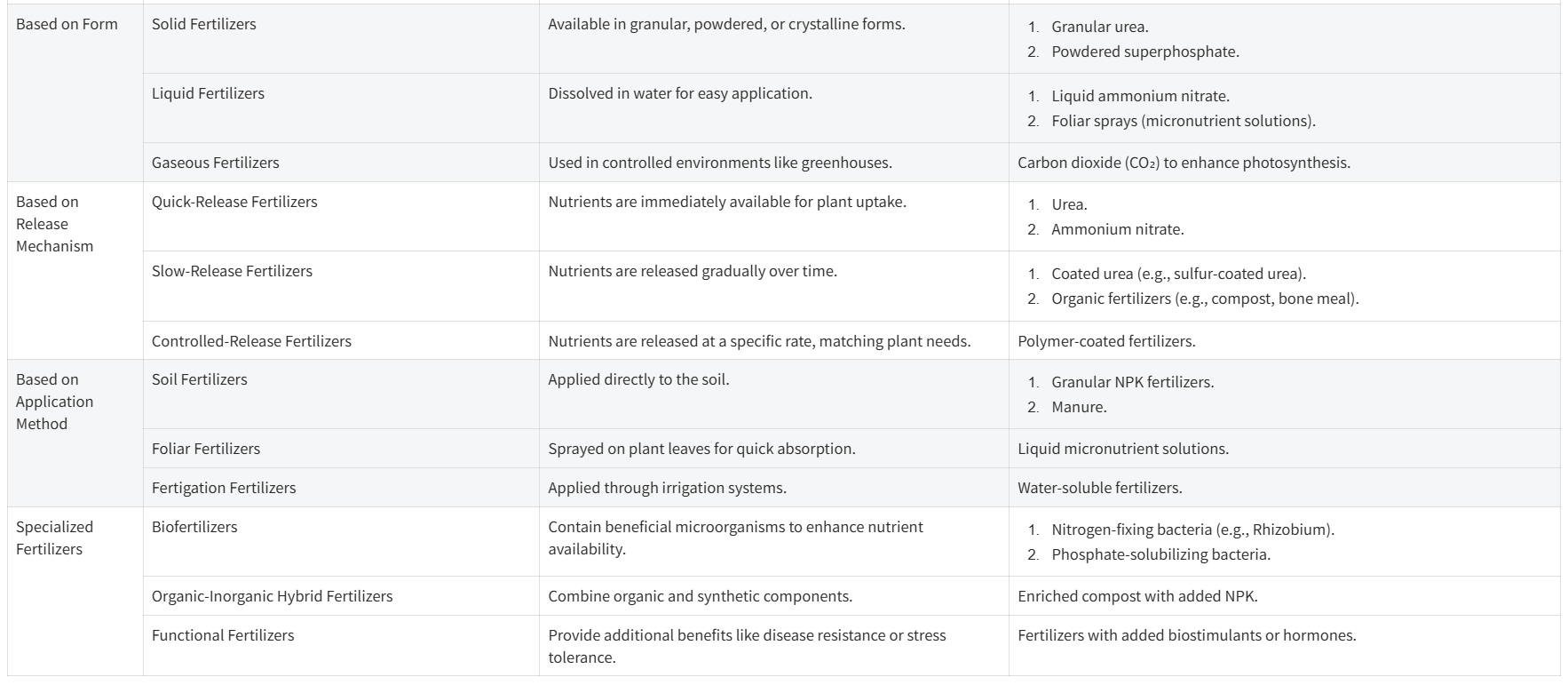
Fertilizers can be classified into various types based on their source, composition, nutrient content, and form. Here’s a comprehensive overview of the different types of fertilizers:
Conclusion
Fertilizers come in a wide variety of types, each suited to specific plant needs, soil conditions, and farming practices. Whether you choose organic, synthetic, slow-release, or foliar fertilizers depends on your goals, such as improving soil health, boosting crop yield, or addressing specific nutrient deficiencies. A balanced approach often yields the best results for sustainable plant growth.