


Below is a comprehensive breakdown of the primary factors influencing disc granulator prices, how they affect performance, and how to choose the right equipment for your production line.
1. Core Configuration: The Baseline of Pan Granulator Cost
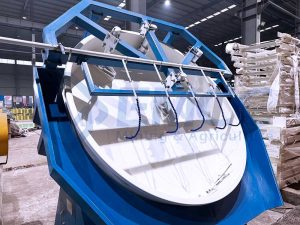
The foundational price of a disc granulator is determined by its “size” and “build quality”—specifically, its production capacity and raw materials.
Specification & Capacity
This is the most direct cost driver. Larger equipment with higher throughput naturally commands a higher price.
- Small/Laboratory Scale: Ideal for small daily throughput or R&D testing. Prices generally range from a few hundred to a few thousand USD.
- Medium-Scale Equipment: Producing 1–5 tons per hour (t/h), this is the mainstream choice for mid-sized fertilizer and chemical plants. Prices typically range from $10,000 to $30,000.
- Large Industrial Equipment: For capacities above 5 t/h, prices increase significantly, reaching $30,000 to $50,000+.
Materials of Construction
The durability of the machine directly correlates with its material cost.
- Carbon Steel: Cost-effective and the standard choice for most non-corrosive, conventional materials.
- Stainless Steel (e.g., 304/316L): Highly corrosion-resistant and essential for handling aggressive materials like chemical raw materials or certain compound fertilizers. Stainless steel models cost substantially more than carbon steel.
2. Functionality & Customization: Driving the Premium Value
Advanced technical features solve specific production pain points. While they add an upfront premium, they yield significant long-term returns.
Anti-Sticking & Wear-Resistant Technology
Crucial for handling high-viscosity or high-moisture materials (such as filtered municipal sludge).
- The Technology: Involves adding specialized anti-sticking linings like Teflon (PTFE), polyurethane, ceramic liners, or utilizing wear-resistant alloy steel.
- Price Impact: This adds 15% to 30% to the initial cost but drastically reduces downtime for cleaning. Case studies show these liners save 1–2 hours of cleaning time daily, significantly boosting effective production hours and making it a highly profitable investment.
Premium Components & Automation Level
The choice of core components creates the widening price gap between budget and high-end machinery.
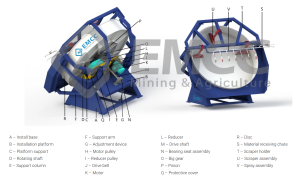
- Motors, Reducers, & Scrapers: High-quality motors and reducers from national standard manufacturers guarantee stable operation and a long lifespan. Furthermore, dynamically driven, infinitely adjustable scraper systems cost more but dramatically improve material adaptability and the final pelletizing rate.
- Inclination Angle Adjustment: It is highly recommended to choose models supporting step-less angle adjustment (such as those using worm gear designs). These machines adapt better to varying raw materials compared to fixed-angle alternatives.
- Automation Systems: Integrating PLC control systems, variable frequency drives (VFDs), and automatic lubrication systems ensures precise control and high efficiency, though it increases initial capital expenditure.
3. Market & Branding: The Trust and Supply Ecosystem
Beyond the physical machine, market dynamics and brand reputation play a massive role in final pricing.
Brand Reputation & After-Sales Service
A reputable brand represents a synthesis of quality, performance, and reliability.
- Product Value: Choosing an established manufacturer means getting a field-tested machine. EMCC serves clients in over 70 countries with 10+ years of industrial experience, ensuring top-tier manufacturing standards.
- After-Sales Value: Comprehensive technical support is factored into the price. Having experienced engineers guide installation, commissioning, and rapid troubleshooting saves thousands in potential downtime.
- Buyer Tip: Always vet the manufacturer before buying. If possible, send your raw materials to their facility for a live material test to verify the granulation rate and pellet uniformity.
Raw Material Costs & Regional Dynamics
- Steel Market Fluctuations: Since steel is the primary material for pan granulators, global steel price volatility directly impacts manufacturing costs.
- Supply & Demand: High seasonal demand in the fertilizer industry can drive machinery prices up. Additionally, regional labor costs and market competition cause geographical price variations.
- Purchasing Strategy: For large-scale projects, utilizing a structured bidding/tendering process is an effective way to optimize overall procurement costs.
4. Hidden Costs: Looking at the Long-Term Investment
When calculating the true cost of a disc granulator, smart buyers look at the entire lifecycle and the broader production ecosystem.
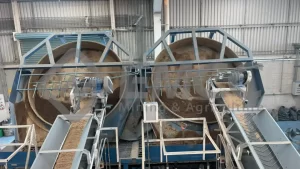
- Auxiliary Equipment: A disc granulator rarely works alone. It is part of a complete fertilizer production line that includes crushers, mixers, dryers, coolers, screening machines, and packaging machines. EMCC provides end-to-end production line customization and equipment manufacturing. [View EMCC Disc Granulation Production Line].
- Energy Consumption: The power of auxiliary equipment must match the granulator. For instance, a production line with an annual output of 30,000 tons requires a total power match of approximately 150–210 kW.
- Long-Term Maintenance: Choosing equipment built with universal standard parts makes future replacements easier and cheaper. Systems featuring automatic lubrication and powered scrapers require minimal manual intervention, saving massive labor costs over time.
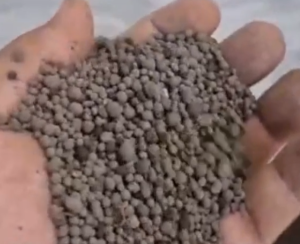
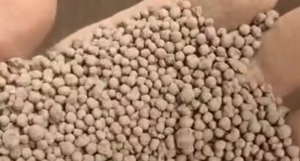
- Actual Operating Performance: Real-world performance metrics—such as the final qualified pellet rate and energy efficiency—matter far more than brochure data. EMCC disc granulators achieve a granulation rate of over 95%.
Summary: Smart Procurement & Avoiding Pitfalls
Ultimately, a successful procurement decision is a balance between equipment price, performance, service, and long-term returns.
- Define Your Needs Clearly: List your “must-have” vs. “nice-to-have” features based on your capacity targets, material characteristics, and product specs.
- Beware of the “Ultra-Low Price” Trap: Extremely cheap machines often compromise on steel plate thickness, use non-standard motors, or lack after-sales support—leading to frequent breakdowns later.
- Focus on Total Cost of Ownership (TCO): The purchase price is just the beginning. Factor in energy consumption, maintenance costs, and potential downtime losses over the machine’s lifespan.
If you have specific capacity requirements and material details, contact EMCC Technical Support today. Our engineers will provide a detailed analysis and a tailored quotation for your project.