


Your formulation, nutrient analysis and bag design can stay identical, and the product still leaves the warehouse with a different commercial fate once it is a 2–4 mm granule instead of a bulk powder. That difference is not marketing: it comes from surface area, particle mass and shape, and each of those can be measured before you invest in a line. This article separates what granulation actually changes from what it does not, with the pilot-test numbers, the field conditions behind them, and the cases where granulating is not worth the cost.
What Problems Does a Good Powder Create Before It Reaches the Field?
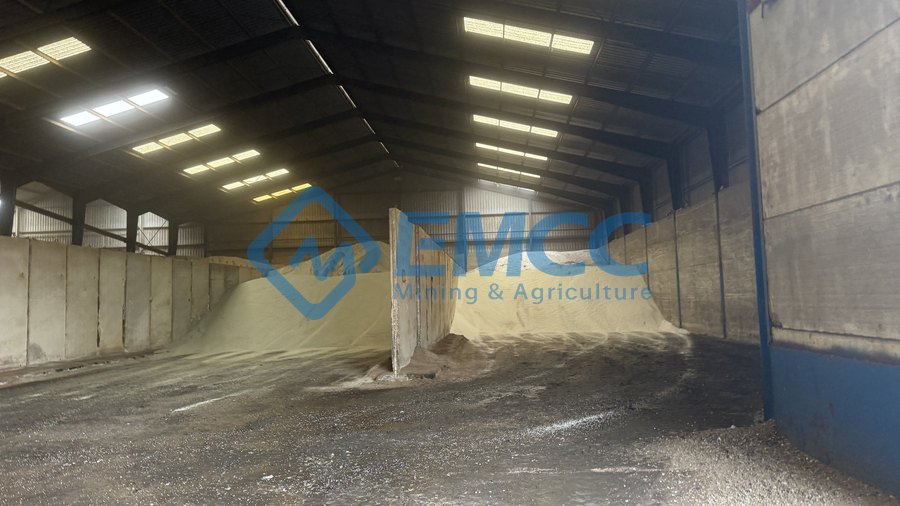
Direct sale of powdered raw material runs into acceptance, dust and application problems long before price becomes the issue. A plant holding large volumes of high-quality powder or by-product usually meets the same three complaints: low customer acceptance, heavy dust during packing and transport, and material that is difficult to apply mechanically.
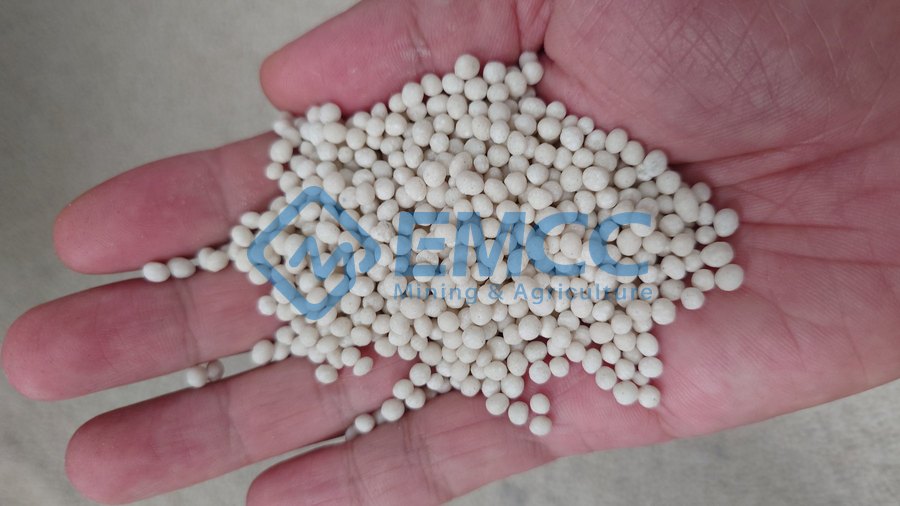
For the same formulation, uniform 2–4 mm granules are more readily accepted in some modern agricultural markets. Whether they become popular still depends on the crop, the region, the price and the application equipment in use there — granular form is a commercial advantage in some channels, not a universal one.
Large farms are moving toward mechanized and drone fertilization, which raises requirements on flowability, particle size concentration and drift resistance. Powdered material is at a disadvantage in some tender scenarios, though not every powder type is excluded from bulk procurement. Buyers who dissolve material in a fertigation tank, or who buy on nutrient content per ton, can be perfectly satisfied with powder.
Powder vs Granule: What Changes When Formulation and Nutrients Stay the Same?
The comparison below holds formulation, nutrients, packaging and sales conditions constant. Read the last column first: it is where the limits live.
| Dimension | Powdered fertilizer | Granular fertilizer | Logic |
|---|---|---|---|
| Mechanized broadcasting | Poor flowability, bridging and clogging, high dust | Usually better flowability; suits spreaders, seeders, drones | Depends on particle size, moisture, equipment |
| Anti-drift and loss | Fine powder drifts with wind; losses may be higher | Greater mass settles faster; drift usually reduced | Not zero drift; wind speed, size and density matter |
| Nutrient release | Dissolves quickly; concentrated application may raise root burn risk | Release affected by size, hardness, coating; can be more gradual | Granules are not controlled release; coating and formulation decide |
| Storage anti-caking | Large specific surface area; higher caking risk | Smaller surface area; absorption tendency usually lower | May still absorb moisture; material and packaging decide |
| End-market acceptance | May be seen as a primary raw material | In some markets, a commercialized standardized product | Brand, channel and price are equally important |
| Large-farm tenders | Restricted in some mechanized tenders | More common in some mechanized tenders | No uniform percentage; category, region and rules differ |
Of these 6 dimensions, only 2 — mechanized broadcasting and drift — are decided mainly by the granule itself. Release is decided by coating and formulation, storage by material and packaging, and acceptance by brand and channel.
The single most misread row is nutrient release. Granules are not slow release. The form changes handling; the coating and the formulation change release.
Why Does Surface Area Explain Most of the Handling Difference?
Granulation agglomerates powder into larger granules, which sharply reduces the exposed specific surface area and limits rapid capillary penetration by water molecules. Less exposed surface means lower risk of moisture absorption, deliquescence and caking during storage and transport.
That improvement has boundaries. Hygroscopicity also depends on the raw material itself, the binder, granule porosity, any coating, ambient humidity and the barrier properties of the packaging. Reducing moisture uptake is a trend, not the same magnitude for every material — a hygroscopic nitrate and a fibrous compost granule do not behave alike.
In pilot tests on certain compound and organic raw materials, specific surface area fell by more than 90% after granulation, and the Carr index moved from 26–37 (poor flow) to 8–15 (good flow). Both figures describe the material tested, not a guaranteed outcome for yours.
Why Do Granules Spread More Evenly From a Spreader or a Drone?
Near-spherical granules with a concentrated particle size distribution usually hold more stable trajectories than fine powder in pneumatic or centrifugal spreading, and they integrate more easily with GPS variable-rate fertilization control. Heavier, denser particles also resist wind better than fines of the same material.
Aerodynamics is not a constant, though. The drag coefficient changes with particle shape, density, wind speed and Reynolds number, so a granule that flies well at 3 m/s can still drift at 8 m/s. Field uniformity, expressed as Cv, depends on spreader calibration, wind, size distribution, density and operator technique. A Cv below 5% cannot be guaranteed by granular form alone — it is a system result, not a product property.
What Do the Numbers Look Like Before and After Granulation?
The two tables below come from pilot tests of certain compound and organic fertilizer raw materials. They show the direction and rough magnitude of the change. Actual projects follow raw material testing and a pilot report on the specific material.
Table 1 — physical property parameters
| Indicator | Original ultrafine powder | 2–4 mm granules | Logic |
|---|---|---|---|
| Specific surface area | High | Significantly reduced | Reduction depends on size and porosity; examples over 90% |
| Bulk density (organic) | 0.3–0.5 t/m³ | 0.7–0.85 t/m³ | Raises effective payload, but packaging and weight limits apply |
| Carr index | 26–37, poor | 8–15, good | Smoother feeding; verify on actual feeding equipment |
| Compressive strength | N/A (no rigid granule structure) | 25–42 N | Design for transport and agricultural machinery impact |
| Moisture uptake and caking | Higher | Usually reduced | Depends on formulation, coating, ambient humidity |
Table 2 — application performance in the field
| Test indicator | Powder state | Standard granules | Description |
|---|---|---|---|
| Mechanical feeding | Prone to bridging and clogging | Usually smoother | Any improvement claim needs same-equipment, same-condition tests |
| Drone spreading drift | Prone to drift | Drift usually reduced | Not zero drift; wind, size, density and equipment matter |
| Targeted utilization rate | May be lower | Can improve under suitable conditions | Magnitude needs field trial verification |
| Transport powdering | High dust | Usually reduced | High-strength granules resist transport better, not dust-free |
Which Five Engineering Measures Make the Granule Perform in the Field?
A granule that photographs well and a granule that runs through a spreader are two different products. Five measures close the gap:
- Particle size concentration — hold the 2.0–4.0 mm proportion high, with ≥90% as a target in some scenarios, to reduce feeding fluctuation at the spreader.
- Single-granule compressive strength — design inside a range that survives transport and spreading-disc impact, for example 25–42 N depending on material and formulation, to cut breakage and powdering.
- Dedusting and polishing — automatic air classification plus a bright polishing section removes surface fines and improves both appearance and flowability.
- Functional additives — where regulations and formulation allow, trace-element colorants or coating agents add identification, storage and transport resistance, or release control. Colorants are not coating agents, and mixing the two up is a common specification error.
- Procurement alignment — match the specification to the buyer’s standards on low dust, drift resistance, drone compatibility, application uniformity and storage stability, and support each claim with measured data.
When Is Granulation Not Worth the Cost?
Granulation is a form modification, not a fertilizer upgrade. It does not create nutrients, and it does not automatically raise fertilizer efficacy. Whether to granulate should be weighed against three things: technical benefit, market premium and granulation cost.
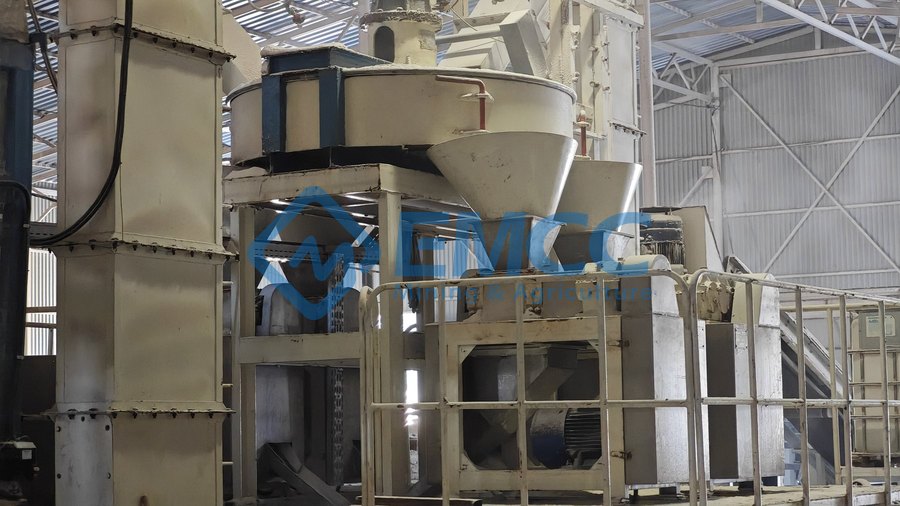
Cost sits mostly in drying, recycle load and wear. Materials with low moisture suit the roller extrusion granulator route, which forms granules without a drying step; materials that need rounding and densification usually run on a disc granulation line or a rotary drum granulation line with drying and cooling. Lines in this category cover roughly 1.0–30.0 t/h, and organic fertilizer and compound products usually need different recycle ratios and different drying loads at the same nominal capacity.
Skip granulation when buyers pay for nutrient content and dissolve the product themselves, when the margin does not cover ton-cost, or when the local market still prices powder and granule as the same commodity. If your line already exists and the problem is output rather than form, the argument is different — see why a compound fertilizer line fails to reach target output and whether to upgrade an existing line or build new.
How Do You Test a Granule Before You Build the Line?
You cannot judge a granule from a photo, and you should not sign a line on a brochure claim. The sequence that works starts with the material:
- Full elemental and physical testing — moisture, viscosity, particle size distribution, heat sensitivity temperature, abrasivity index and hygroscopicity.
- Pilot-scale granulation or extrusion — recycle ratio, linear pressure, granulation temperature, heating curve, granulation rate and strength data.
- Design freeze — PFD, P&ID, 3D workshop layout and civil embedded load drawings, then modular assembly and no-load linkage testing before shipment.
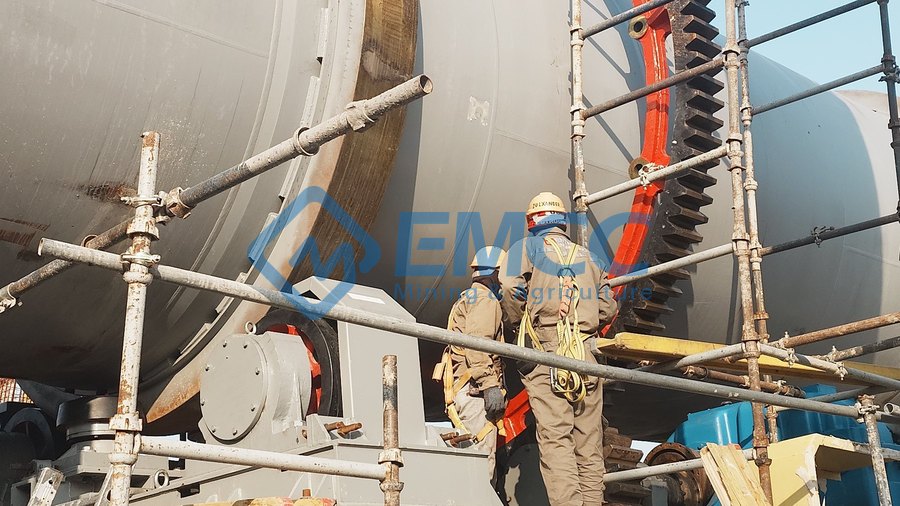
- On-site commissioning — engineers guide installation, commission with your material and train operators until contractual capacity is reached, with a crusher, mixer, bucket elevator and pulse dust collector sized around the same mass balance.
A 10–30 kg raw material sample is enough to run the first two steps and return a report on particle size distribution, granulation rate, single-particle compressive strength and hygroscopicity, together with a customized PFD and equipment list.
Granulation is a form decision. Test it before you build it. Send us your raw material type, moisture content, and target hourly output, and we will return a matched machine model and configuration recommendation — or use the contact form if you also want a 3D workshop layout sized to your site.