


EMCC supplies deicing salt granulation lines for sodium chloride, calcium chloride, magnesium chloride, corrosion-inhibited chloride blends and chloride-free organic-salt deicers. Lines cover 1–8 t/h continuous production, from raw material pretreatment and granulation to screening and packaging.
Deicing Salt Types and Granulation Requirements
Most solid deicing salts are granulated or otherwise size-enlarged: powder salt absorbs moisture, cakes and is easily blown away during spreading. Granules improve flowability, metering accuracy and wind resistance.
Type | Typical products | Applications | Granulation notes |
Chloride salts | NaCl, CaCl₂, MgCl₂ | Regular winter to low temperature | Cost-effective baseline; CaCl₂ is highly hygroscopic and hard to store or ship without granulation |
Corrosion-inhibited chloride salts (low-corrosivity chloride systems) | Chloride salt + corrosion inhibitor (~5%) | Same chloride systems; bridges and high-value structures where chloride use cannot be fully eliminated | Inhibitor must be uniformly consolidated to avoid batch-to-batch variation |
Chloride-free organic salts | Potassium acetate, potassium formate | Airports, bridges, water-source protection areas | Higher cost; roller compaction granulation (dry compaction) works, but parameters must be re-established by pilot testing |
Chloride salt + corrosion inhibitor (~5%)
Same chloride systems; bridges and high-value structures where chloride use cannot be fully eliminated
Inhibitor must be uniformly consolidated to avoid batch-to-batch variation
Higher cost; roller compaction granulation (dry compaction) works, but parameters must be re-established by pilot testing
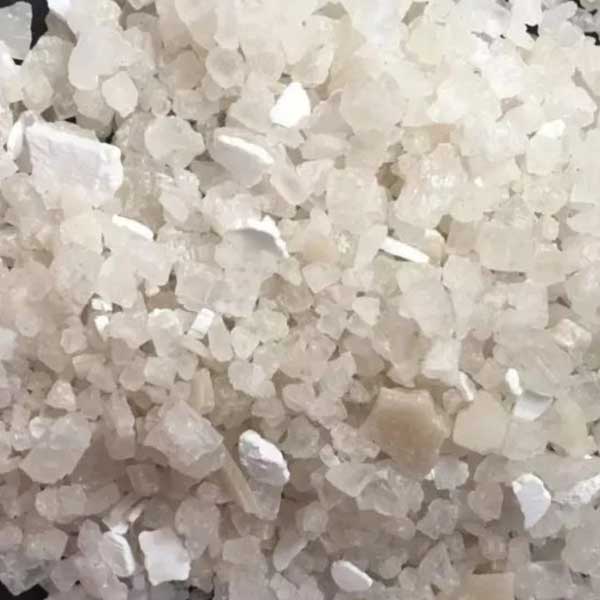
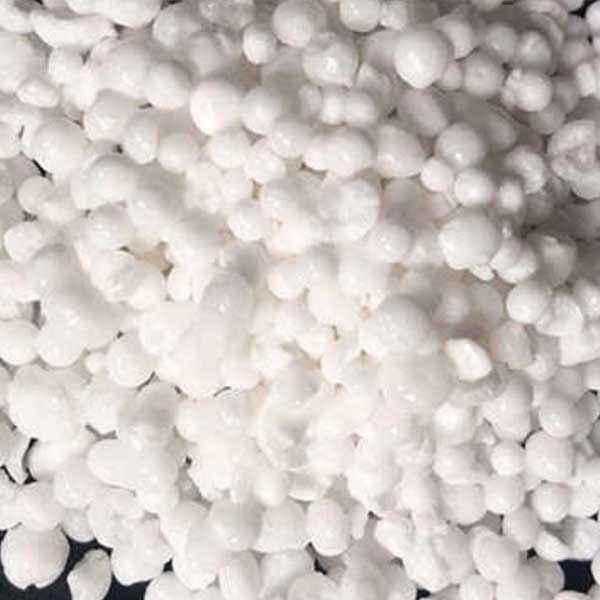
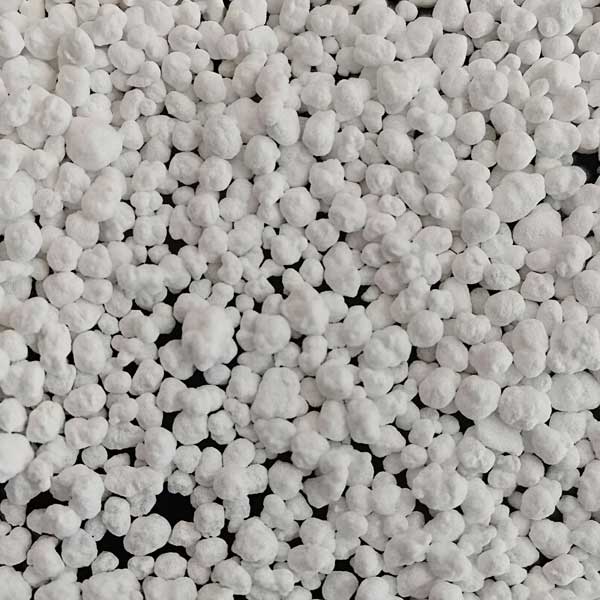
Example corrosion-inhibited formulation: 80% NaCl + 15% CaCl₂ + 5% corrosion inhibitor.
Salt powder has almost no natural binding capacity and is often hygroscopic and corrosive. Wet agglomeration can require pushing feed moisture to 25%–30%, plus drying and dust handling, with a large recycle load. Roller compaction granulation (dry compaction) does not rely on binders: two counter-rotating rollers compact the powder into flakes, which are then crushed and sized into granules (pocketed-roller briquetting is optional). Typical feed moisture is 2%–10%, and no drying step is needed for moisture introduced by granulation itself.
Moisture Windows by Material
Material system | Moisture window | Notes |
NaCl-based | 2.2%–2.9% (optimum) | Within the general 2%–10% range |
CaCl₂/MgCl₂ blends | 0.5%–1.2% | Special window for highly hygroscopic materials |
Chloride-free organic salts | Determined by pilot testing | Do not copy chloride-salt parameters |
Within the general 2%–10% range
0.5%—1.2%
Chloride-free organic salts
Do not copy chloride-salt parameters
For corrosion-inhibited formulations, the inhibitor may be introduced at 4%–6% moisture during mixing. The feed must then be conditioned/dried to the base-material roller-compaction window before entering the machine.
Granulation Notes by Material
Roller compaction granulation (dry compaction) is the main route. Forming pressure 19–30 MPa; roller gap reduced in three steps (2.8 → 2.5 → 2.3 mm); on-size granule yield 82%–88% for NaCl-based systems; power consumption about 45–52 kWh/t for the granulation section.
The process window narrows. Freezing and ice-melting performance depends on the NaCl:CaCl₂ ratio and water content; confirm the effective temperature by phase diagram or pilot trial. A single “melting point” is not representative of a blended deicer. MgCl₂ or Mg-containing raw material above 8% of feed needs preheating at 60–80 °C. Carbon steel roller shells corrode at 0.10–0.14 mm/year under continuous salt service; high-chromium-nickel alloy rollers are recommended. Confirm corrosion data with the supplier or test data for the specific duty.
Introduce the inhibitor during pre-granulation mixing so it is consolidated inside the granules or at their interfaces. Post-granulation addition is not recommended. If the inhibitor is introduced at 4%–6% mixing moisture, condition/dry the feed to the base-material roller-compaction window before granulation.
In pilot trials for a specific organic-salt blend, the process is workable at about 90 °C internal temperature and 70 rpm roller speed. For a ~4 mm product, use a ~5 mesh top screen; 40 mesh is only for fines recovery. Pilot testing is required; do not copy chloride-salt parameters.
Key Process Control Points
Process chain: Forced feeding → high-pressure flaking (or optional pocketed-roller briquetting) → crushing and sizing → screening with a recycle loop.
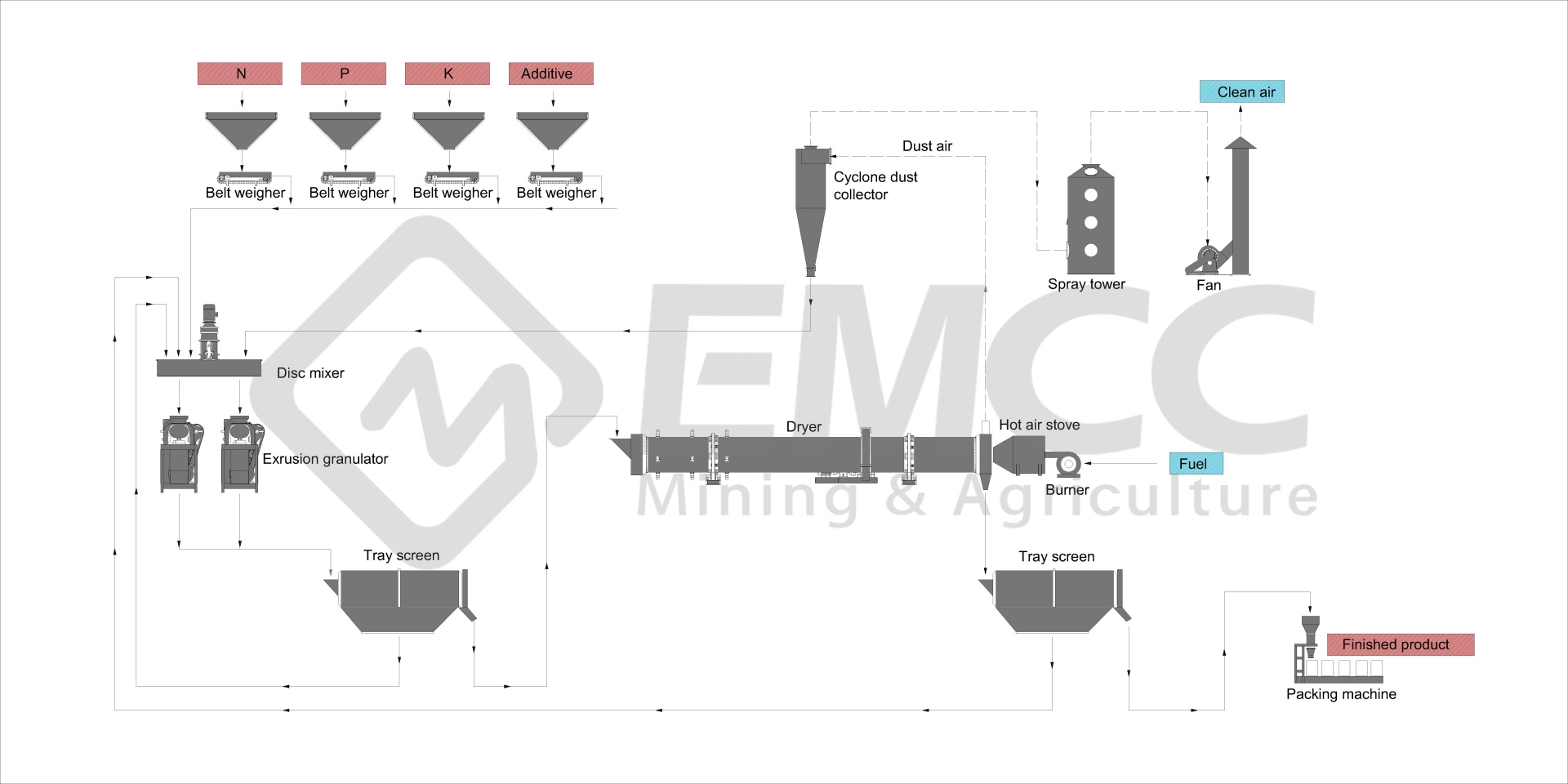
● Mixing: Double-screw conical mixer, 18–22 rpm, ≥25 min, homogeneity CV < 5%.
● Screening: For a nominal 2–5 mm product, use a 4 mesh top deck (~4.75 mm), a 10 mesh middle deck (~2.0 mm) and a 40 mesh fines-recovery deck; final product is approximately 2–4.75 mm. Set screen tension to the screen supplier’s specification.
● Bonding mechanism: Trace moisture forms a liquid film; salt ions migrate and recrystallize into solid bridges. Too little pressure leaves weak granules; too much causes lamination after discharge.
● Anti-caking: 0.3%–0.5% diatomaceous earth reduces caking from about 12% to below 3%; use double-layer PE bags (inner film ≥0.08 mm) inside woven bags.