


Why Choose EMCC
10+ Years Industry Experience
100+ Global Sucess Cases
High capacity enclosed design utilizes steam for humidity and temperature control, thereby reducing drying energy consumption and improving granulation efficiency.
Simple operation, less return material, superior particle size control.
Minimal moisture for granulation for specific raw materials, significantly reducing or eliminating subsequent drying needs.
Compact modular fertilizer granulation line with a capacity of 0.5T/H-1.5T/H, featuring small footprint, easy operation and installation, and low investment.
Provides auxiliary equipment updates and upgrades for both new and existing fertilizer granulation lines to boost efficiency and sustainability.
EMCC provides environmental protection equipment for different scenarios and materials to meet production and local environmental requirements.
Success Stories
From concept to production, we prioritize project profitability and balance complexity and feasibility in the design.
Startups or established plants, Shanghai Exceed Industry Co., Ltd. delivers customized and optimized solutions for your efficient and sustainable development.
Asia Rotary Drum Granulation Fertilizer Production Line
North America Disc Granulation Fertilizer Production Line
Europe Extrusion Granulation Fertilizer Production Line
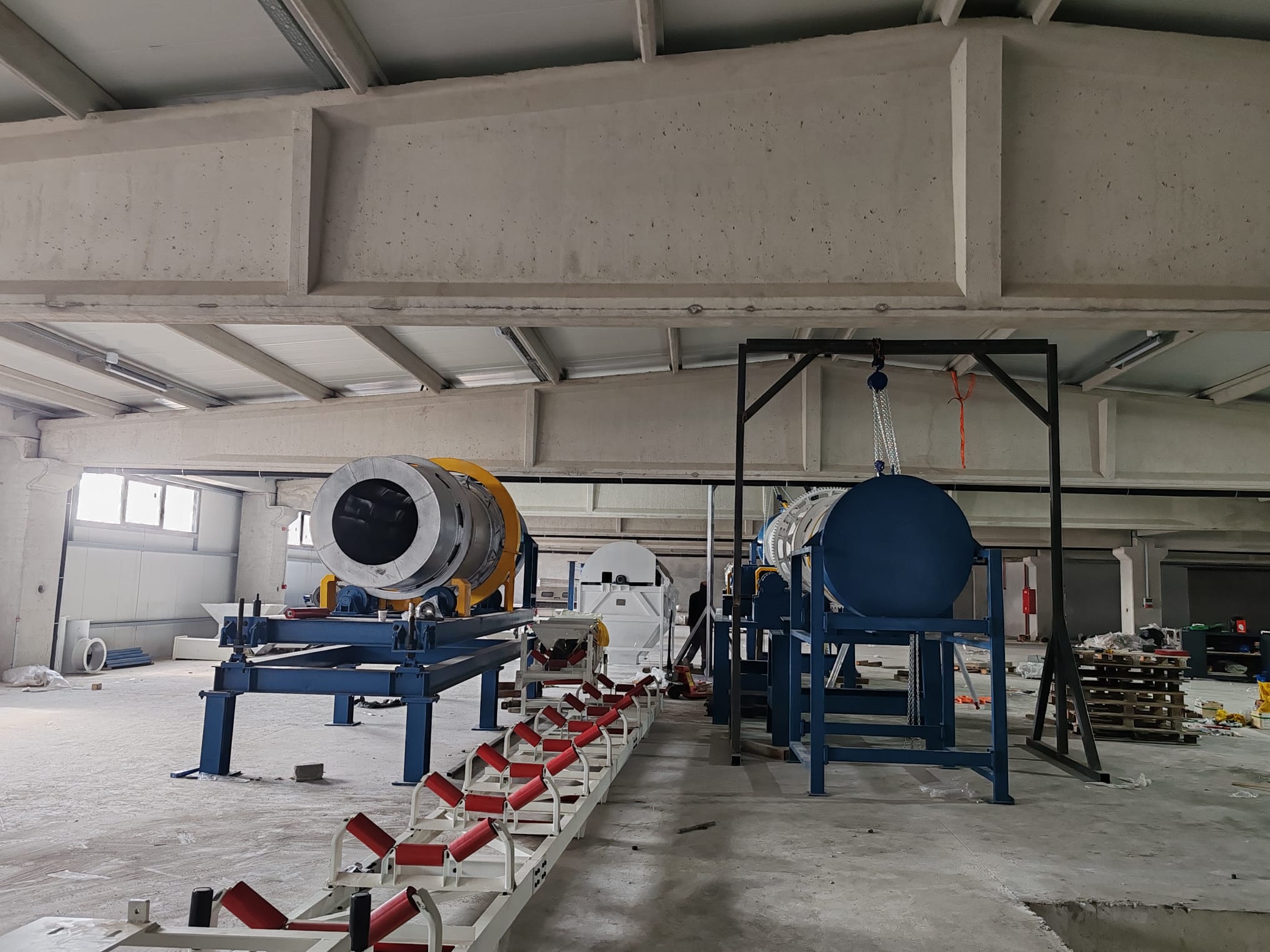
Factory area: 30,000 ㎡+ | skilled workers: 150+
Max. drum-type equipment processing: Ø4.5 m
Integrated Plate Rolling Machine
EMCC Latest News / R&D / Innovation Centre
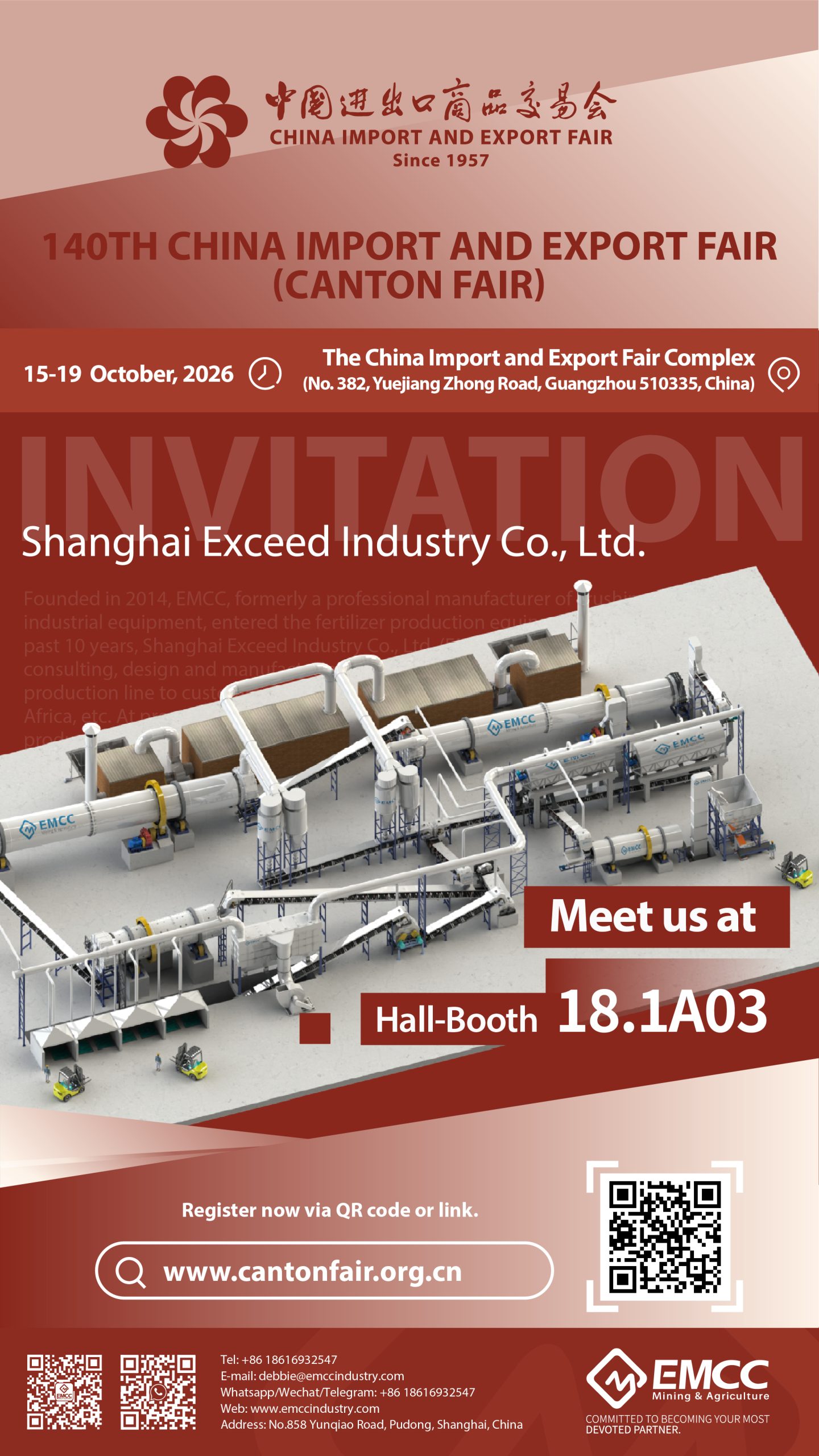
The 140th Canton Fair Is Coming! EMCC Welcome your visit!
China Import and Export Fair, also known as the Canton Fair. The 140th Canton Fair will be held at the
Why Your Compound Fertilizer Line Is Not Meeting Target Output: Is Granulation the Bottleneck?
EMCC MINING & AGRICULTURE Why Your Compound Fertilizer Line Is Not Meeting Target Output: Is Granulation the Bottleneck? A Technical
Upgrade or New Build? A Fertilizer Granulation Investment Decision Guide
Upgrade or New Build? A Neglected Investment Decision When an existing fertilizer line reaches its capacity ceiling, the obvious question