


Why Your Compound Fertilizer Line Is Not Meeting Target Output:
Is Granulation the Bottleneck?
A Technical Capacity-Diagnosis Guide for Fertilizer Producers and Agricultural Trading Companies
APPLICATION NPK · MAP · DAP · TSP · Organic-inorganic fertilizer | DECISION FOCUS Saleable output · process fit · upgrade scope | REFERENCE RANGE Typical engineering range: 3–30 t/h |
A decision guide for identifying the true capacity constraint before replacing equipment.
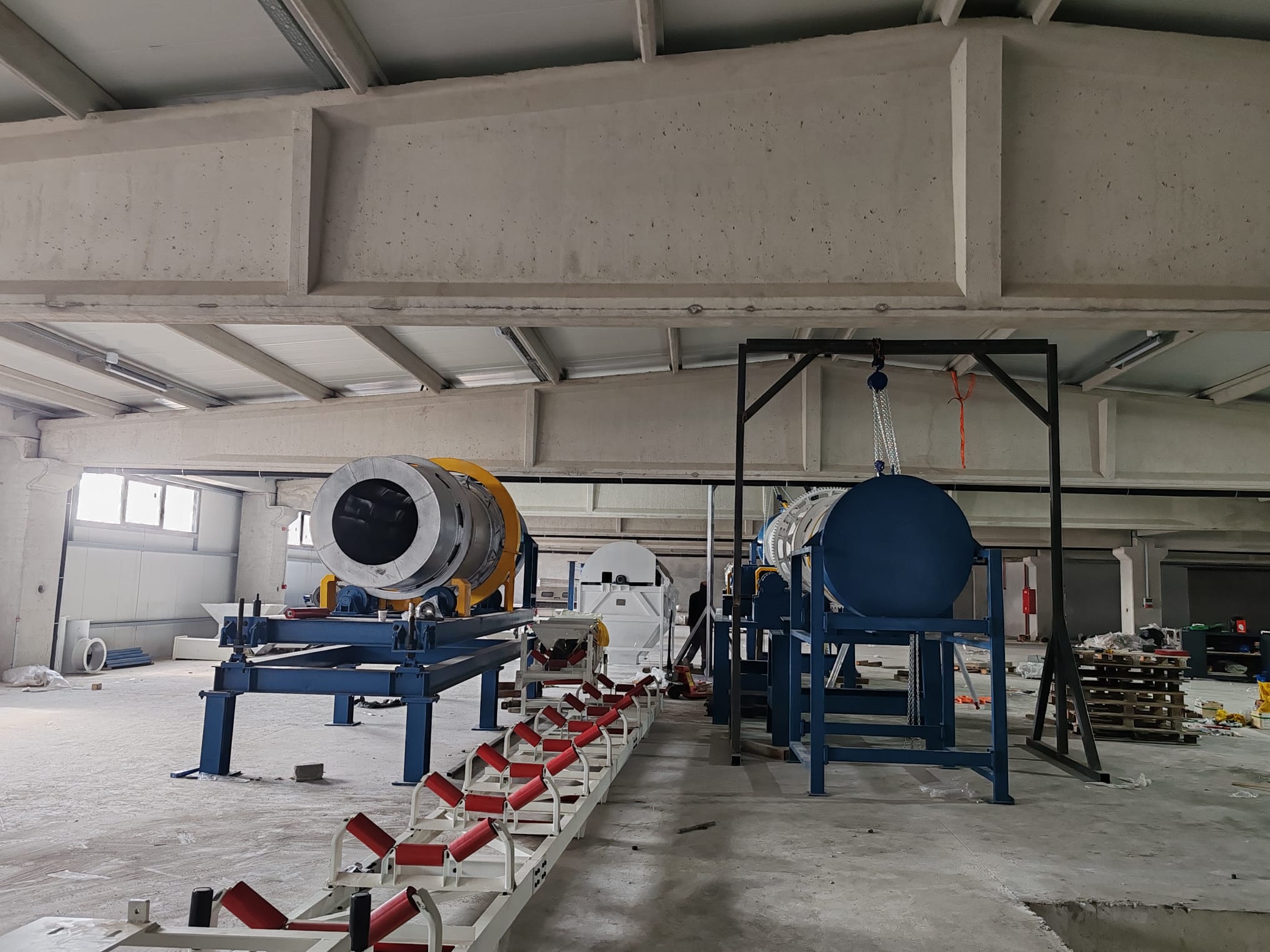
Rotary drum granulation line in an operating fertilizer plant.
EXECUTIVE ANSWER
Granulation may be the bottleneck, but saleable output is controlled by the complete line: batching, preparation, wet granulation, drying, cooling, screening, recycling, coating, and packing.
1. Define the Output You Are Trying to Improve
Capacity should mean stable on-spec product over a defined sampling period—not motor speed or instantaneous feed rate. A practical mass balance is:
Feed rate = saleable on-spec product + recycled material + process losses.
If faster feeding generates more oversize or undersize material and a higher recycle rate, saleable output may not improve. During a stable run, record feed rate, moisture, product temperature, screen fractions, recycle ratio, and on-spec product.
2. Start with the Complete Wet Granulation Process
For NPK fertilizer, the process is:
1 Batching | 2 Pretreatment & crushing | 3 Mixing |
4 Granulation | 5 Drying & cooling | 6 Screening & recycling |
7 Coating | 8 Packing | Quality gate On-spec product |
Poor batching changes the formulation entering the mixer. Incomplete crushing creates hard inclusions and uneven moisture distribution. Poor mixing produces inconsistent nuclei, while an overloaded screen sends excessive recycled material back to the line.
EMCC reference material describes wet granulation as a broad-application route for MAP (monoammonium phosphate), DAP (diammonium phosphate), TSP (triple superphosphate), NPK, and organic-inorganic compound fertilizers. Equipment choice still requires project-specific testing because raw materials, moisture, particle-size targets, additives, heat source, and required on-spec product vary by product.
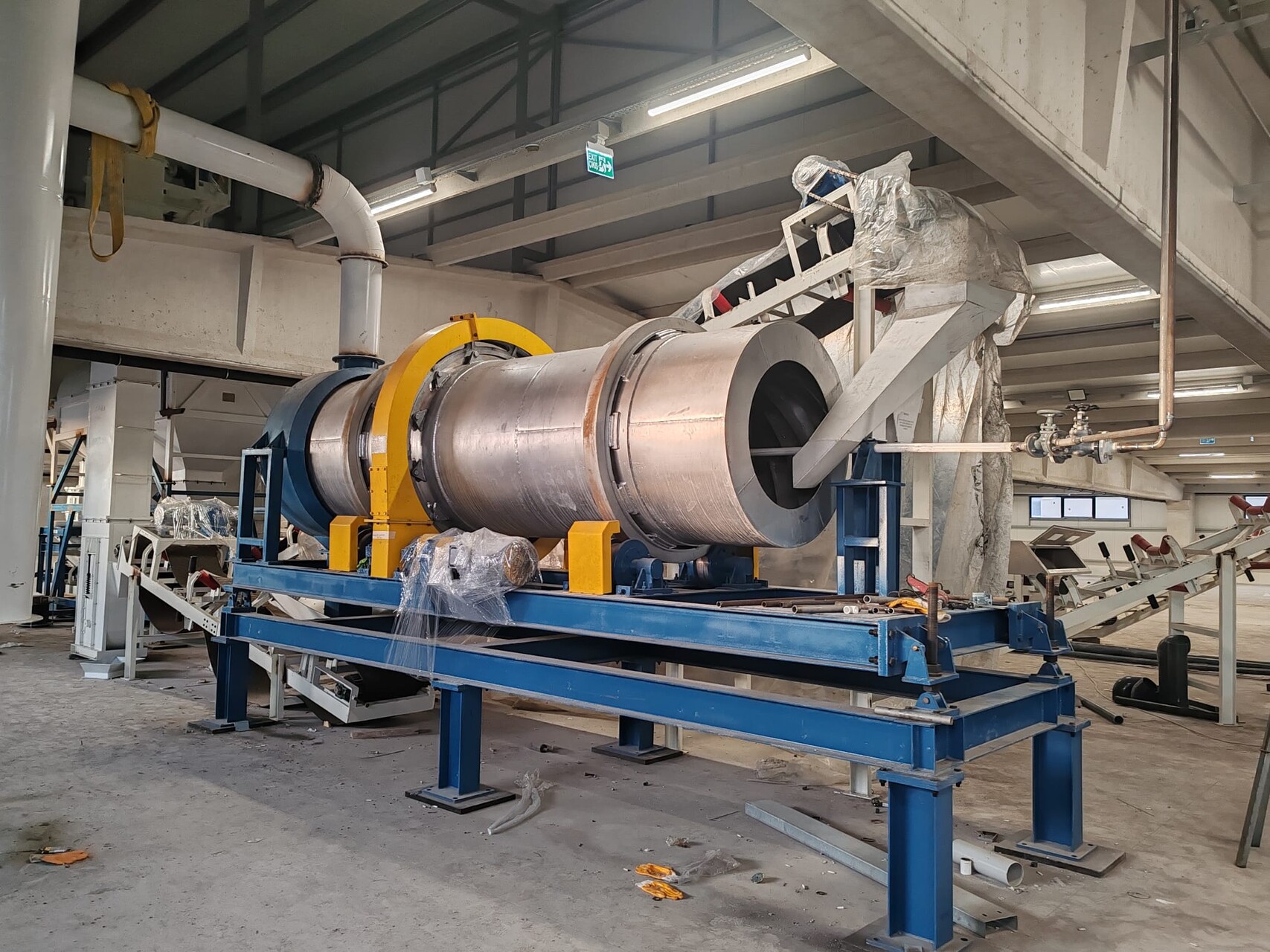
Rotary drum granulator with riding rings, trunnion rollers, and gear drive.
3. What a Rotary Drum Contributes—and What It Cannot Fix
A rotary drum granulation line is the continuous wet-granulation workhorse for larger single-line output. Tumbling and agglomeration inside the rotating drum form granules. Steam can adjust moisture and material temperature; this may improve granulation and reduce dryer load. Enclosed operation can also support better containment.
TYPICAL MOISTURE 25%–35% | TYPICAL CAPACITY 3–30 t/h | IMPORTANT LIMIT Project-specific test required |
These are typical engineering ranges, not guarantees for every formulation. Results depend on bulk density, particle-size distribution, chemical compatibility, liquid addition, residence behavior, drying duty, screening efficiency, and the definition of on-spec product. A rotary drum cannot correct poor formulation, insufficient drying or cooling, or screening bottlenecks.
4. When a Disc Granulation Line May Be the Better Fit
A disc granulation line offers direct visual control, simple adjustment, and flexible formulation changes. It can suit smaller producers, agricultural traders validating a new product range, and plants that change recipes frequently. Disc granulation may reduce return material in suitable formulations, but it is not automatically the higher-capacity option.
ROTARY DRUM | DISC GRANULATOR | SHARED DESIGN RULE |
Continuous wet granulation; typically higher single-line output; enclosed operation. | Direct visual adjustment; flexible changeovers; suitable for selected formulations. | Dryer, cooler, screening equipment, recycle crusher, dust control, and packing must be sized with the granulator. |
5. Four Diagnostic Checks Before Replacing the Granulator
01 FEED STABILITY | 02 MATERIAL CONDITION |
Compare actual feed rate with the design basis. Inspect hopper bridging and verify belt weighers or feeders are not starving the granulator. | Measure moisture, particle-size distribution, bulk density, and liquid-addition stability after mixing. Excessive fines can increase the recycle stream. |
03 GRANULATOR CONDITIONS | 04 BACK-END CAPACITY |
Review drum loading, rotation, inclination, spray or steam distribution, buildup, sealing, and granule nuclei. Do not judge performance from motor speed alone. | Compare dryer duty, cooler discharge temperature, screening equipment capacity, oversize/undersize split, crusher load, and recycle ratio. A downstream bottleneck can make the granulator appear undersized. |
6. A Practical Upgrade Route for Growing Plants
For customers in humid or corrosive regions, equipment selection should include material compatibility, enclosure, dust control, drainage, and maintenance access—not only purchase price. For a trading company entering fertilizer production, a modular line can reduce initial installation burden while allowing later additions such as fermentation equipment for organic or organic-inorganic fertilizer lines, screening, coating, packing, or extra drying and cooling capacity.
01 MEASURE Establish a stable mass balance | 02 TEST Use the actual formulation | 03 MODIFY Upgrade connected bottlenecks |
Confirm target particle size and on-spec product before changing equipment. Overseas commissioning, operator training, spare-parts planning, and clear acceptance criteria should be included in the project scope.
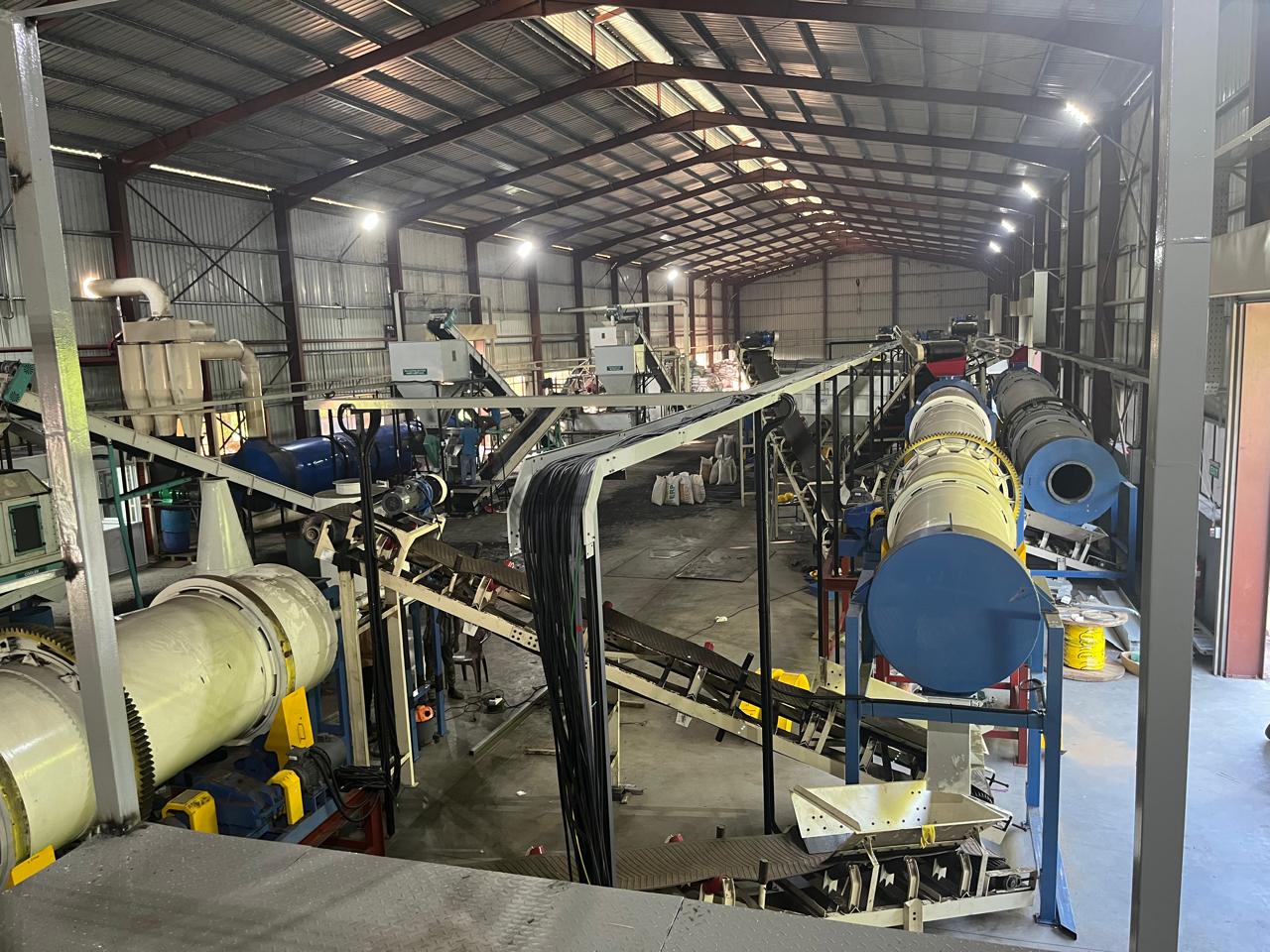
Rotary drum granulator installed in a fertilizer plant.
FINAL DECISION
Granulation can be the bottleneck, but replacing the granulator without a complete mass-balance diagnosis can leave the real constraint untouched. Choose a rotary drum line when stable, continuous wet granulation and typically higher single-line output are the priority. Consider a disc granulator when visual control and formulation flexibility matter more. The reliable decision is a matched process package—not a machine selected in isolation.
READY TO ASSESS YOUR LINE? Prepare raw-material analysis, target capacity, target particle size, moisture range, on-specification rate, and stable sampling data. | Explore EMCC fertilizer equipment and NPK compound fertilizer solutions. |