
Authored by Jason Dong / Product Engineer
Most granulation projects fail their environmental review on scope, not on hardware: the equipment is fine, but nobody defined which limits apply, who approves them, and which stack each number belongs to. This article sets out the three levels of compliance, the international systems that supply the reference numbers, and the treatment train each pollutant needs — so you can specify a line that passes acceptance and still passes two years later.
What Are the Three Levels of Environmental Compliance?
Compliance for a granulation project runs on three separate levels, and projects usually under-scope the second and third.
- Emission compliance — pollutant concentrations and emission rates at each stack meet the applicable standard.
- Total quantity control — annual emissions stay inside the approved allowance, even when every hourly reading is in range.
- Compliance procedures — environmental impact assessment (EIA) approval, discharge permit, and completion acceptance after commissioning.
The procedures level is where schedules slip. The EIA system must be implemented before construction, environmental facilities must be built under the “three simultaneities” requirement, and acceptance must be completed after commissioning. A line that emits within limits but was built ahead of its approval is not a compliant line.
Which International Systems Set the Benchmark?
Three systems supply most of the numbers quoted in tenders. None of them replaces the law of the host country.
- EU — the BREF documents and BAT Conclusions under the Industrial Emissions Directive (IED, 2010/75/EU) set BAT-AELs for large-scale inorganic chemicals, covering particulate matter and ammonia from granulation, drying, cooling and coating.
- World Bank / IFC — the EHS Guidelines give emission reference values based on Good International Industry Practice for nitrogen fertilizer plants. Where host-country regulations are absent or less stringent, these guidelines become the benchmark.
- US — EPA NSPS (40 CFR Part 60) and NESHAP (40 CFR Part 63) limit particulate emissions from phosphate fertilizer dryers and granulation lines.
Projects seeking international financing must also meet the EHS requirements of the lending institution, which typically follow the World Bank framework.
Typical limits, and the source of each
| Pollution source | Pollutant | Limit | Source | Treatment |
|---|---|---|---|---|
| Granulation / drying / cooling stack | Particulate matter | 15–55 mg/Nm³ (BAT-AEL) | EU BAT (LVIC-AAF) | Cyclone + bag or ceramic filtration |
| Urea / ammonium nitrate granulation | Ammonia (NH₃) | 3–35 mg/Nm³ (BAT-AEL) | EU BAT | Acid scrubbing or water washing |
| Nitrogen fertilizer plants | Ammonia (NH₃) | 50 mg/Nm³ (guideline) | World Bank EHS | Acid scrubbing or water washing |
| Hot blast furnace stack | SO₂ | 10–35 mg/Nm³ (BAT-AEL) | EU BAT | Alkaline scrubbing |
| Hot blast furnace stack | NOx | 30–250 mg/Nm³ (BAT-AEL) | EU BAT | Low-NOx burner + SCR/SNCR |
| Phosphate dryer | Particulate matter | 0.030 kg/Mg feed (NSPS) | US EPA 40 CFR 60 | Cyclone + bag or wet scrubbing |
| Plant boundary noise | Day / night | 55/45 dB(A), residential | World Bank EHS | Enclosure + silencer |
| Plant boundary noise | Day / night | 70/70 dB(A), industrial | World Bank EHS | Enclosure + silencer |
Read the table as reference ranges, not as a menu. EU BAT-AELs are ranges achievable with Best Available Techniques — compliance benchmarks, not mandatory limits. World Bank values are GIIP references. US EPA limits are expressed per unit of product for specific source categories. The applicable conditions differ, so the rows cannot be compared horizontally with each other.
How Do You Treat Particulate Matter from Drying and Cooling?
Drying exhaust goes through two stages. First a cyclone removes coarse particles above roughly 10 μm; then a pulse bag filter or ceramic filter takes out the fine dust. Per the EU BAT Conclusions, bag or ceramic filters reach 2.5–10 mg/Nm³ — well inside the 15–55 mg/Nm³ BAT-AEL band.
Filtration velocity is the parameter that decides whether that number holds. It usually sits at 0.8–1.2 m/min, and the value follows the dust explosion index (Kst) and the media characteristics. Too high, and bag wear and dust penetration rise; too low, and the equipment volume grows for the same air volume.
Bag media follows flue gas temperature:
- ≤130 °C — conventional polyester needle-punched felt.
- 130–180 °C — PPS needle-punched felt.
- 180–260 °C — P84 or PTFE membrane media.
- 130–180 °C with acidic gas — PPS plus PTFE membrane.
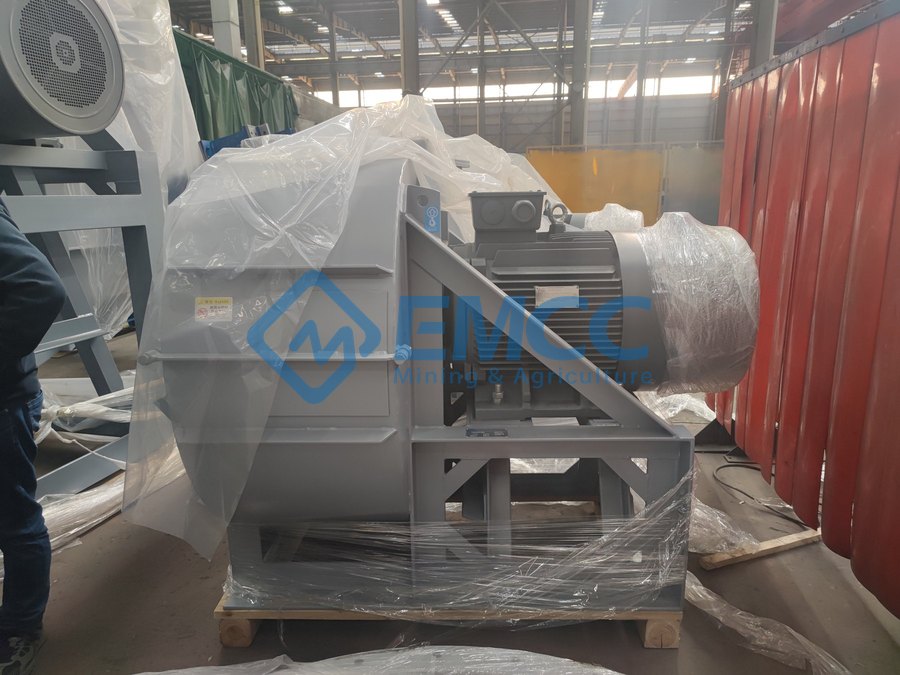
The pulse dust collector is only as good as the air it receives: an undersized duct or a leaking valve shows up as visible dust at the stack, not as a filter problem.
How Do You Handle Ammonia from Urea and Ammonium Nitrate Granulation?
Ammonia is highly soluble, so water spraying already removes a large share of it. For higher concentrations, dilute sulfuric or phosphoric acid scrubbing converts NH₃ into ammonium sulfate or phosphate solution, which can be returned to granulation or sold as liquid fertilizer — the scrubber becomes a recovery unit rather than a cost centre.
The EU BAT range for urea and ammonium nitrate granulation is 3–35 mg/Nm³; the World Bank EHS guideline for nitrogen fertilizer plants is 50 mg/Nm³. In a spray tower-based system, the practical constraint is contact time and pH, not tower height alone.
One rule is absolute: SO₂ and NH₃ need separate treatment stages, and acid and alkaline solutions must never share the same stage in one scrubber tower. A tower designed with one recirculation loop for both will neutralise its own scrubbing liquor and lose removal efficiency within days.
What About SO₂ and NOx from the Hot Blast Furnace?
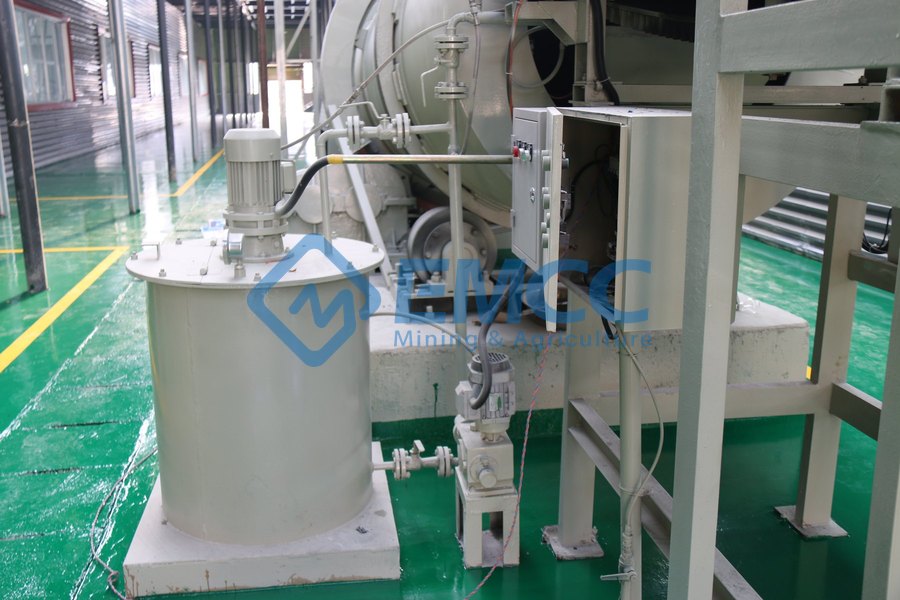
On natural gas hot blast furnaces, low-NOx burners hold NOx at 30–250 mg/Nm³, with SCR or SNCR where the lower end of that band is required. SO₂ is handled in an alkaline scrubbing tower with liquid recycle and periodic slag discharge; the EU BAT range is 10–35 mg/Nm³.
The distinction matters commercially. A burner change is a combustion measure and cheap to operate; SCR is a reagent cost for the life of the plant. If your permit only demands the upper end of the NOx band, low-NOx burners alone will usually satisfy it.
Which Five Design Details Decide Whether It Passes Next Year Too?
Acceptance day is easy. These five details decide whether the package still complies on a random Tuesday in year three.
- Filter bag material matched to temperature and acidity — PPS with PTFE membrane suits acidic gas at 130–180 °C; a polyester bag in the same position fails in months.
- Variable-frequency induced draft fan — holds a slight negative pressure in the workshop so fugitive dust stays inside the building instead of drifting to the fence line.
- Automatic pH control of spray water — online monitoring and dosing keep the absorption liquid reactive; manual dosing drifts with load.
- Uniform airflow in ducts — guide vanes at elbows and reducers reduce local wear, which is where most duct failures start.
- CEMS configured to the local authority’s indicator list — usually particulate matter, SO₂ and NOx; a monitor that reports the wrong parameters is worse than none.
When Is the Dust Itself the Hazard?
Organic raw materials and starch-based additives make the dust collector a safety device as well as an emission device. Two disciplines then share one parameter: filtration velocity drops to 0.8–1.0 m/min, below conventional values, to limit dust build-up on the bags, and that same velocity still has to deliver the capture efficiency the permit requires.
Explosion protection for a combustible dust package usually includes:
- Explosion venting — vent area calculated to NFPA 68 or EN 14491, with vent panels actually installed, not value-engineered out.
- Spark detection and extinguishing at the duct inlet, before the spark reaches the filter.
- Anti-static media — anti-static PPS felt or PTFE membrane, with the grounding chain verified at commissioning.
Standard selection follows the destination market: ATEX (2014/34/EU) is the EU directive, NFPA 68 and NFPA 654 are US standards, and projects outside both frameworks usually design to the IEC 60079 series. Export projects should select by destination regulation, not by whichever document the supplier has on file.
What Should You Test Before You Commit to a Configuration?
The environmental package is sized from material data, so the data comes first:
- Raw material testing — moisture, viscosity, particle size distribution, thermal-sensitivity temperature, abrasiveness and the dust explosion index (Kst).
- Pilot trials — granulation rate, particle strength and waste-gas generation data, which is what the scrubber and filter are actually sized on.
- Engineering design — PFD, P&ID, 3D workshop layout and civil embedded load drawings, with the environmental protection systems sited against the real duct routing rather than a catalogue drawing.
- Modular integration and FAT — no-load interlock testing before shipment, so the fan, damper and CEMS logic are proven in the shop.
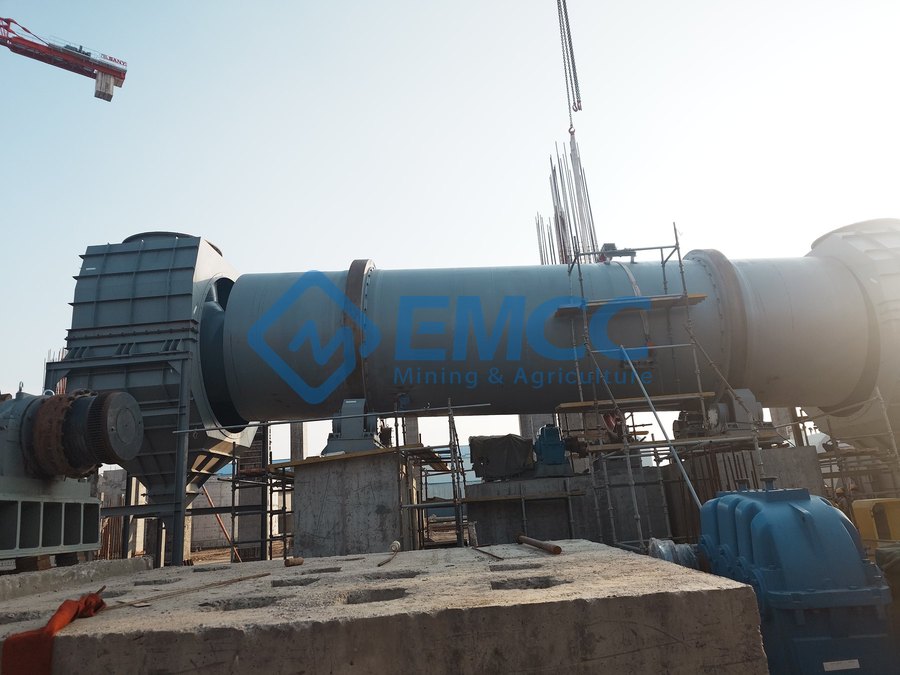
For a line that dries and cools, the rotary drum granulation line configuration also decides the exhaust volume the filter must handle, and retrofitting a compliant package onto an existing building is often a different project from building new — see whether to upgrade an existing line or build new before you fix the equipment list.
Send us your raw material type, moisture content, target hourly output and the emission limits your EIA approval sets, and we will return a matched configuration, an emission-control roadmap and the test list your project needs — including Kst and waste-gas characterization from a 10–30 kg sample. You can also use the contact form to send the permit conditions you are working to.